
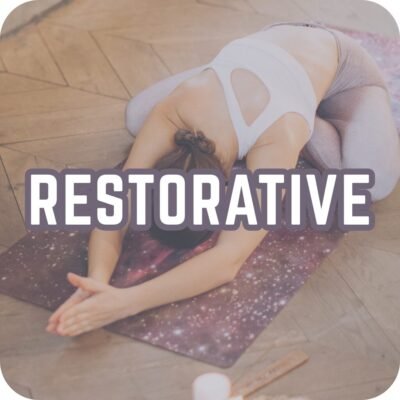
Experience the art of deep rest and healing in Restorative Yoga— your complete guide to gentle, prop-supported poses that nurture the nervous system.
Overview
- STYLE | Extremely gentle, passive, nurturing; focused on complete stillness
- STRUCTURE | 4-6 supported poses per class, held 5-20 minutes each
- BREATH | Natural, effortless; breath awareness deepens relaxation
- FLOW | Very minimal movement; slow, mindful transitions
- PACE | Ultra-slow; focus on complete surrender and ease
- FOCUS | Deep rest, parasympathetic activation, healing, replenishing energy
- TEACHER ROLE | Grounded space-holder; ensures comfort, provides emotional support
- VIBE | Calming, meditative, cocoon-like; "being held" by the practice
Restorative Yoga: A Deep Dive into Deep Rest
Restorative Yoga is a sacred pause—a practice of conscious rest that invites the body and mind into a state of deep, supported stillness. Using props such as bolsters, blankets, blocks, straps, and eye pillows, the body is carefully positioned and held in passive postures for extended periods—often 10-20 minutes each.
Unlike active yoga styles where you build strength and flexibility through muscular effort, Restorative Yoga asks you to do the opposite: to completely let go. Every part of the body is fully supported so that muscles can release, breath can deepen naturally, and the nervous system can shift into its healing mode.
In this comprehensive guide, we will explore the history and origins of Restorative Yoga, break down its unique therapeutic approach, examine the specific benefits for body and mind, and help you determine whether this gentle practice is right for your needs.
The Origins and Evolution of Restorative Yoga
From Iyengar to Judith Hanson Lasater
The practice has its roots in Iyengar Yoga, where B.K.S. Iyengar developed the innovative use of props to support healing, precision, and accessibility. Iyengar discovered that using blankets, bolsters, and blocks allowed injured or ill students to receive the benefits of yoga postures without strain.
Restorative Yoga was further refined and popularized by Judith Hanson Lasater, Ph.D., P.T., a student of Iyengar who recognized the profound need for rest in modern life. She emphasized that true relaxation is not passive—it's an active practice of surrendering to support and allowing the body's natural healing mechanisms to engage.
Restorative Yoga emerged as a response to the high demands of contemporary existence, offering a counterbalance to overstimulation, chronic stress, and the depletion that comes from constantly doing rather than being.
The Science of Rest
What makes Restorative Yoga unique is its direct effect on the autonomic nervous system. When the body is fully supported and there's no effort required, the parasympathetic nervous system (often called "rest and digest") activates. This triggers a cascade of healing responses: heart rate slows, blood pressure decreases, stress hormones drop, and immune function improves.
Style and Structure
Style: The Art of Non-Doing
Restorative Yoga is quiet, non-effortful, and deeply internal. Poses are held in complete stillness, with no stretching or muscular activation required. This distinguishes it from Yin Yoga, where you do feel a stretch in the connective tissues. In Restorative, every part of the body should feel fully supported—if you notice any sensation of stretch or effort, you need more props.
It is the yin of yin—a practice of radical non-doing. The challenge isn't physical; it's learning to surrender, to stop fixing and adjusting, and to simply receive the support that's offered.
Structure: Quality Over Quantity
A typical Restorative class includes only 4-6 postures, each held for 5-20 minutes. This is vastly different from flow-based styles where you might move through dozens of poses. The structure typically follows this arc:
- Opening grounding practice (breath awareness, intention, or short meditation)
- 4-6 supported postures, carefully propped with bolsters, blankets, and blocks
- Gentle breath awareness or guided relaxation between poses
- Extended Savasana or Yoga Nidra-inspired closing
Common Restorative Poses
- Supported Child's Pose (Balasana)
- Reclining Bound Angle (Supta Baddha Konasana)
- Legs Up the Wall (Viparita Karani)
- Supported Twist
- Supported Bridge
- Supported Forward Fold
Benefits of Restorative Yoga
The combination of complete support, extended stillness, and conscious relaxation creates a unique set of benefits that differ from more active yoga practices:
Physical Benefits
Deep muscle and fascial release, reduced blood pressure and heart rate, improved sleep quality, relief from chronic pain and tension, enhanced immune function.
Mental & Emotional
Profound stress relief, reduced anxiety and depression symptoms, emotional release and processing, enhanced sense of safety and calm, greater self-awareness.
Nervous System
Activates parasympathetic response (rest and digest), reduces cortisol levels, balances fight-or-flight overdrive, supports trauma recovery with proper guidance.
Sleep & Recovery
Improves sleep quality and duration, supports physical recovery from illness or injury, reduces insomnia symptoms, promotes deep cellular restoration.
Hormonal Balance
Supports hormonal regulation, particularly helpful during menstruation, pregnancy, and menopause. Reduces stress hormones that disrupt endocrine function.
Chronic Conditions
Complementary support for chronic fatigue, fibromyalgia, autoimmune conditions, and recovery from burnout. Always consult healthcare providers.
Important Considerations
While Restorative Yoga is gentle and accessible, the practice can bring up unexpected emotions as the body releases stored tension. This is normal and healthy, but those working with trauma should seek trauma-informed instruction. If you have difficulty being still or find rest anxiety-provoking, start with shorter holds and be patient with yourself.
Who Is Restorative Yoga For?
Restorative Yoga is truly accessible to almost everyone—it's one of the most inclusive forms of yoga practice. This healing modality is particularly well-suited for:
Stress & Burnout
Anyone experiencing chronic stress, exhaustion, or burnout who needs permission and practice in deep rest.
Recovery
People recovering from illness, injury, or surgery who need gentle movement and healing support.
Anxiety & Sleep Issues
Those with anxiety, insomnia, or difficulty calming an overactive mind who benefit from nervous system regulation.
Pregnancy
Pregnant individuals (with appropriate modifications) seeking gentle support for their changing bodies.
Athletes
Active individuals and athletes who need recovery practices and nervous system reset to complement intense training.
Trauma Survivors
Those working through trauma (with trauma-informed instruction) who benefit from practices that restore a sense of safety.
Who Might Prefer Other Practices
While Restorative is widely accessible, consider other options if you:
- Prefer active movement and find stillness frustrating (try Vinyasa or Hatha first)
- Want to build strength and flexibility (pair Restorative with more active styles)
- Are looking for a cardiovascular workout
- Find deep relaxation triggers difficult emotions you're not ready to process (start with shorter, simpler practices)
How to Set Up for Restorative Yoga at Home
Create a Quiet, Warm Space
Choose a peaceful room where you won't be interrupted. Turn off bright overhead lights in favor of dim lamps or candles. Warm the space—your body temperature drops during deep relaxation. Silence your phone completely.
Gather Your Props
Collect pillows, blankets, and towels. A yoga bolster is ideal but couch cushions work well. Eye pillow or soft scarf for covering eyes. More props is better—you can always remove some, but you can't add support you don't have.
Set a Gentle Timer
Use a timer with a soft, gentle alarm for 10-20 minutes per pose. This allows you to fully relax without watching the clock or worrying about time. Many meditation apps have perfect timer options.
Support Every Body Part
Nothing should hang unsupported or feel any sensation of stretch. Support under knees, behind head, under arms, beneath ankles—if any body part isn't completely at ease, add a prop. If you feel any effort, add more support.
Surrender Completely
Once you're set up, stop adjusting. The practice is about letting go, not perfecting alignment or achieving anything. Give yourself full permission to do nothing. Allow yourself to rest without guilt.
Frequently Asked Questions
Conclusion
Restorative Yoga offers something increasingly rare in modern life: permission and practice in deep rest. In a culture that values productivity, doing, and achieving, this practice reminds us that we are human beings, not human doings—and that rest is not a reward to be earned but a necessity for health and wholeness.
The benefits extend far beyond the mat. Regular Restorative practice can fundamentally change your relationship with rest, stress, and your own nervous system. Students often report improved sleep, reduced anxiety, better emotional regulation, and a greater capacity to handle life's challenges with equanimity.
Whether you're recovering from illness, managing chronic stress, or simply seeking balance in an overwhelming world, Restorative Yoga offers a sanctuary. The props hold you. The stillness heals you. The practice teaches you that you are worthy of rest—not because you've earned it, but because you exist.
Explore Related Yoga Styles
If you appreciate Restorative's gentle approach, you might also enjoy Yin Yoga for deeper connective tissue work, or Gentle Yoga for slow movement with ease. Hatha Yoga offers a foundational practice that can be adapted to any pace. For contrast and balance, pair your Restorative practice with more active styles like Vinyasa.
Find Your Perfect Restorative Class
Connect with experienced Restorative yoga teachers and studios in your area.
Search Classes →