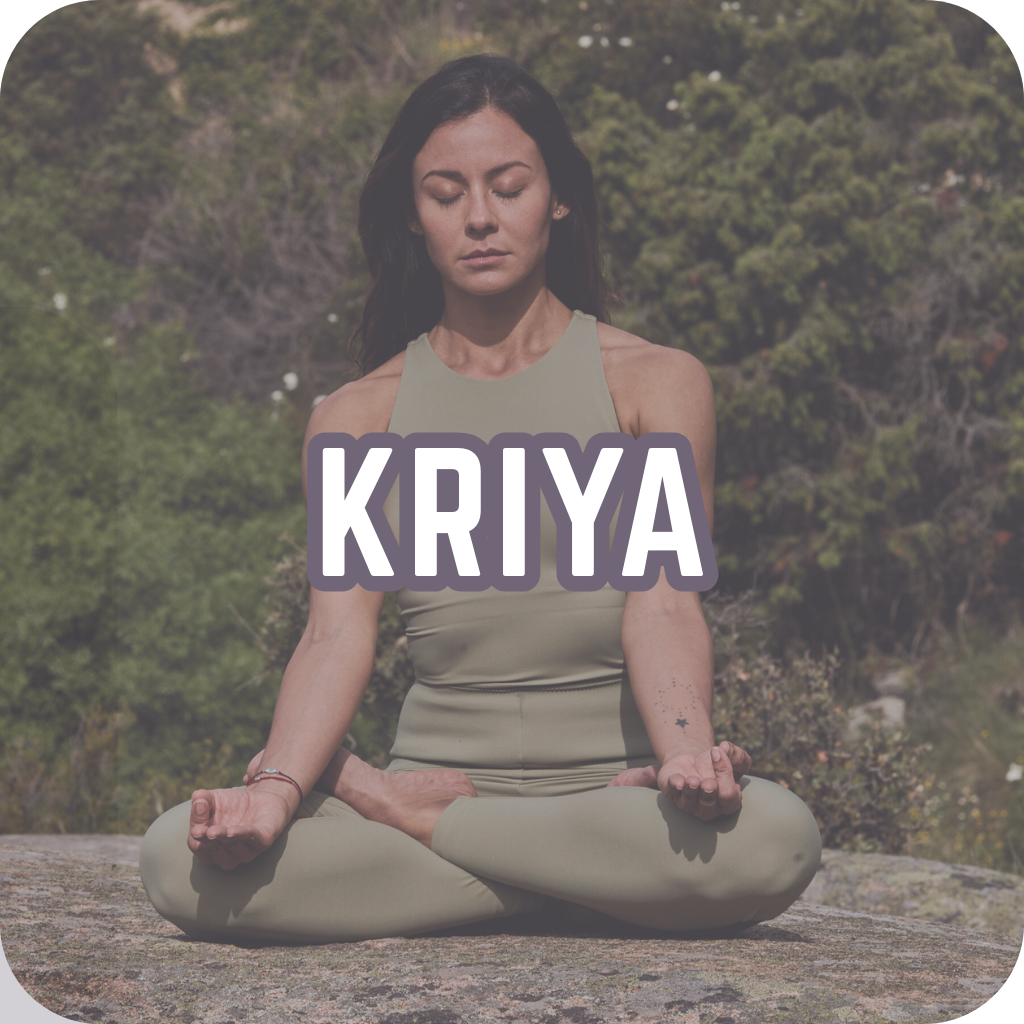
Kriya Yoga
Kriya Yoga is an internal, meditative practice that uses precise breath, mantra, and energy techniques to circulate life force along the spine. Less about shapes on the mat and more about the inner laboratory of attention, Kriya offers a time-tested path toward stillness, clarity, and spiritual awakening.
What is Kriya Yoga?
Kriya Yoga is a meditative practice built on conscious breath and the deliberate movement of energy through the body. The Sanskrit word kriya means “action” or “completed action”—here, the inner action of directing attention and life force (prana) along the spine. Rather than flowing through postures, you sit, breathe with precision, and turn the senses inward. Popularized in the West by Paramahansa Yogananda, Kriya is often described as a practical technique for accelerating spiritual growth—a path of stillness, not spectacle.
Quick Facts
Overview
Kriya Yoga: The Inner Technology of Breath and Energy
Where most modern yoga unfolds through movement, Kriya Yoga turns the practice inward. It is a science of attention—a structured method for quieting the body, regulating the breath, and guiding the mind toward deep states of meditation. The postures and stretches you might expect are minimal here. What matters is the breath, the spine, and the steady gaze of awareness.
At its heart, Kriya works with pranayama—breath techniques designed to draw life energy up and down the spinal pathway, the channel the yogic traditions call the sushumna nadi. Practitioners describe this circulation as magnetizing the spine, gradually calming restlessness and revealing layers of inner stillness usually hidden beneath the noise of daily thought.
Kriya Yoga is rarely loud or dramatic. It rewards patience, regularity, and humility. The transformation it promises is slow and cumulative—less a sudden breakthrough than a steady clearing, like sediment settling until still water turns clear.
What to Expect in a Kriya Yoga Session
A Seated, Inward Practice
You'll spend most of the session seated comfortably, spine tall, eyes closed. Rather than moving through poses, you turn your attention inward. For students used to active yoga, the stillness can feel unfamiliar at first - but that stillness is exactly where the work happens.
Precise Breath Techniques
The core of Kriya is controlled, conscious breathing. You may be guided through slow spinal breathing, gentle retention, and subtle adjustments of the breath that draw your awareness up and down the spine. The instructions are exact - small details of timing and attention matter.
Mantra and Meditation
Many sessions weave in silent mantra or a point of focus, such as the space between the eyebrows. These anchors give the restless mind somewhere to settle, helping you slip past surface chatter into quieter, more spacious states of awareness.
Guidance and Gradual Depth
A good Kriya teacher introduces the techniques slowly, layer by layer, ensuring you have a stable foundation before deepening. The practice is traditionally transmitted directly, so expect personal attention, careful instruction, and an emphasis on doing less, but doing it well.
The Origins and Lineage of Kriya Yoga
An Ancient Practice, Revived in the Modern Age
Kriya Yoga is said to be an ancient technique, referenced in the yogic traditions and the Bhagavad Gita, that faded from common practice over the centuries. Its modern revival is credited to Mahavatar Babaji, a revered yogi of legend, who is said to have reintroduced the technique through his disciple Lahiri Mahasaya in 1861.
From Lahiri Mahasaya, the practice passed to Swami Sri Yukteswar, and then to his student Paramahansa Yogananda, who carried Kriya Yoga to the West in the 1920s. Yogananda’s spiritual classic, Autobiography of a Yogi, introduced millions of readers to Kriya and remains one of the most widely read books on yoga ever written.
A Living Tradition
Today Kriya Yoga is preserved and taught through several lineages and organizations that trace their roots to this chain of teachers. While details of the formal techniques vary between schools, the essence remains constant: a disciplined, breath-centered path toward inner realization. The practice shares a family resemblance with Kundalini Yoga, though Kriya tends toward the quiet and internal where Kundalini moves toward the active and expressive.
Style and Structure
Style:
Kriya Yoga is defined by interiority. The practice asks you to withdraw attention from the outer world and direct it inward, toward breath and subtle sensation. There is little to perform and nothing to achieve outwardly—success is measured only by depth of stillness and steadiness of focus.
Because the techniques work with energy and concentration, the practice is methodical and precise. Small adjustments—the length of a breath, the placement of attention—carry real weight. This is yoga as inner craft.
Structure:
A typical Kriya session moves through a recognizable arc: centering and posture, ethical and mental preparation, breath techniques, mantra or concentration, and a period of silent meditation to absorb the practice. Sessions usually open and close in stillness.
Common elements you may encounter include:
- •Spinal breathing — guiding the breath and attention up and down the spine
- •Mantra — silent repetition to steady and focus the mind
- •Concentration — resting attention at a focal point, often the brow center
- •Stillness — absorbing the effects in quiet, seated meditation
A meditation cushion, blanket, or low bench supports an upright, relaxed spine—the one piece of “alignment” that genuinely matters in Kriya.
Breath, Focus and Teacher Role
Breath:
Breath is everything in Kriya. The techniques use slow, conscious breathing—sometimes with gentle sound, sometimes with subtle retention—to settle the nervous system and concentrate awareness. Some lineages relate Kriya breathing to cleansing breath practices, but the emphasis in Kriya is refinement and control rather than vigor.
Focus:
Kriya Yoga focuses on:
- •Calming and concentrating a restless mind
- •Refining and slowing the breath
- •Circulating subtle energy along the spine
- •Cultivating sustained inner awareness
- •Supporting a disciplined, contemplative way of life
Teacher Role:
The teacher in Kriya is a guide and transmitter. They:
- •Introduce the techniques carefully, in the right order
- •Watch for steadiness before deepening the practice
- •Offer correction on breath, posture, and attention
- •Hold the contemplative tone and integrity of the lineage
Vibe and Community
The vibe in a Kriya practice is:
- Quiet, reverent, and deeply inward
- Disciplined and devotional in tone
- Often practiced alone at dawn or dusk
- Centered on direct experience over performance
Kriya communities tend to be study-oriented and contemplative, gathering around shared meditation, teachings, and the lineage’s texts rather than around athletic practice.
Benefits of Kriya Yoga
Kriya Yoga offers benefits across the mental, physical, and spiritual dimensions of practice.
Calms and Concentrates the Mind
Sustained breath and meditation quiet mental chatter, sharpening focus and building a steadier, more resilient attention over time.
Refines and Deepens the Breath
Conscious breathing trains the respiratory and nervous systems toward slower, smoother rhythms associated with deep relaxation.
Soothes the Nervous System
The slow, internal pace shifts the body toward its rest-and-restore mode, easing stress and supporting emotional balance.
Supports Spiritual Growth
Practitioners describe a gradual unfolding of clarity, equanimity, and inner stillness - the quiet fruits of consistent practice.
Cultivates Steady Energy
Working consciously with prana leaves many practitioners feeling calm yet alert, grounded yet quietly energized through the day.
Builds Discipline and Presence
A short daily ritual of breath and stillness anchors the day, nurturing patience, self-awareness, and a more contemplative life.
Kriya Yoga vs. Other Yoga Styles
Kriya is often confused with more familiar energetic practices. Here is how it compares to styles it is sometimes grouped with.
| Feature | Kriya Yoga | Kundalini | Hatha | Yin |
|---|---|---|---|---|
| Primary Focus | Breath & energy | Energy awakening | Posture & balance | Connective tissue |
| Movement | Minimal, seated | Dynamic, repetitive | Gentle, active | Still, passive |
| Energy | Quiet, internal | Vigorous, expressive | Balanced | Cool, receptive |
| Setting | Often solo | Group or solo | Group class | Group class |
| Best For | Meditators | Energy seekers | Beginners | Deep stretching |
The key distinction: Kriya is the quietest practice in this group—less about what the body does and more about what the breath and mind reveal in stillness.
Who Is Kriya Yoga For?
Kriya Yoga is ideal for:
- Established meditators wanting a structured breath practice
- Students drawn to the spiritual dimension of yoga
- Anyone seeking calm, focus, and inner stillness
- Those who prefer a quiet, contemplative practice to an athletic one
- People ready to commit to consistent daily practice
It may not suit:
- Those seeking a physical, posture-based workout
- Anyone wanting fast results without sustained practice
Kriya Yoga is not about doing more—it’s about going deeper.
Frequently Asked Questions
Is Kriya Yoga suitable for beginners?
Yes, but it is best learned with a qualified teacher. The breath and energy techniques are subtle and traditionally passed on directly, step by step. Beginners can start with breath awareness and meditation, then deepen into the formal techniques under guidance.
What is the difference between Kriya and Kundalini Yoga?
Kriya is internal and still; Kundalini is active and expressive. Kriya centers on quiet pranayama and circulating energy along the spine. Kundalini uses vigorous breathwork, movement, and mantra to awaken energy more dynamically.
Do I need initiation to practice Kriya Yoga?
In traditional lineages, the formal techniques are given through initiation. This protects the integrity of the practice and ensures it is learned correctly. The supporting elements—breath awareness, meditation, and ethical living—are open to everyone and form a meaningful foundation.
Is Kriya Yoga a religion?
No—it is a spiritual practice, not a religion. It has roots in the yogic traditions of India and was popularized in the West by Paramahansa Yogananda, but practitioners of any faith, or none, can practice it. The focus is direct inner experience rather than belief.
How often should I practice Kriya Yoga?
A short daily practice beats occasional long sessions. Most practitioners aim for 15 to 45 minutes of breath and meditation each morning or evening. Consistency is the heart of Kriya—it deepens gradually through steady, patient repetition.
Conclusion
Kriya Yoga is a path of quiet depth—a practice that trades the visible drama of movement for the invisible work of breath, energy, and attention. It asks little of the body and much of the mind, offering in return a steadiness that ripples out into the rest of life.
It is not a quick fix or a fitness routine. It is a discipline, a devotion, and for many a lifelong companion.
If you’re drawn to the energetic side of yoga, the dynamic practice of Kundalini Yoga awakens vitality through breath and movement. If you want a gentle, grounding foundation, Hatha Yoga builds steadiness in body and breath. And if stillness calls to you, the long, meditative holds of Yin Yoga or the deep rest of Restorative Yoga make beautiful companions to a seated Kriya practice.
Sources & Further Reading
- 1.Yogananda, Paramahansa. Autobiography of a Yogi. Self-Realization Fellowship, 1946.
- 2.Satyananda Saraswati, Swami. Asana Pranayama Mudra Bandha. Yoga Publications Trust, 1969.
- 3.Feuerstein, Georg. The Yoga Tradition. Hohm Press, 1998.
- 4.NIH NCCIH. “Yoga: What You Need To Know.” nccih.nih.gov
Lisa Marie
E-RYT 500
Lisa Marie is an E-RYT 500 certified yoga teacher with 20+ years of personal practice and 15+ years teaching. She specializes in Vinyasa, Hatha, and restorative practices, with training in the Ashtanga tradition. Lisa Marie is co-founder of Viveka Yoga Studio in Downtown Los Angeles.
Related Content
Continue your yoga journey with these related guides
Kundalini Yoga
The energetic cousin of Kriya—dynamic breath, movement, and mantra to awaken vitality from within.
Explore Kundalini →Hatha Yoga
A grounding, breath-aware foundation that pairs naturally with the seated stillness of Kriya practice.
Explore Hatha →Yin Yoga
Long, meditative holds that cultivate the same inner stillness Kriya seeks—through the body rather than the breath.
Explore Yin →Find Your Perfect Kriya Yoga Class
Connect with experienced kriya yoga teachers and studios in your area.
Search Classes →