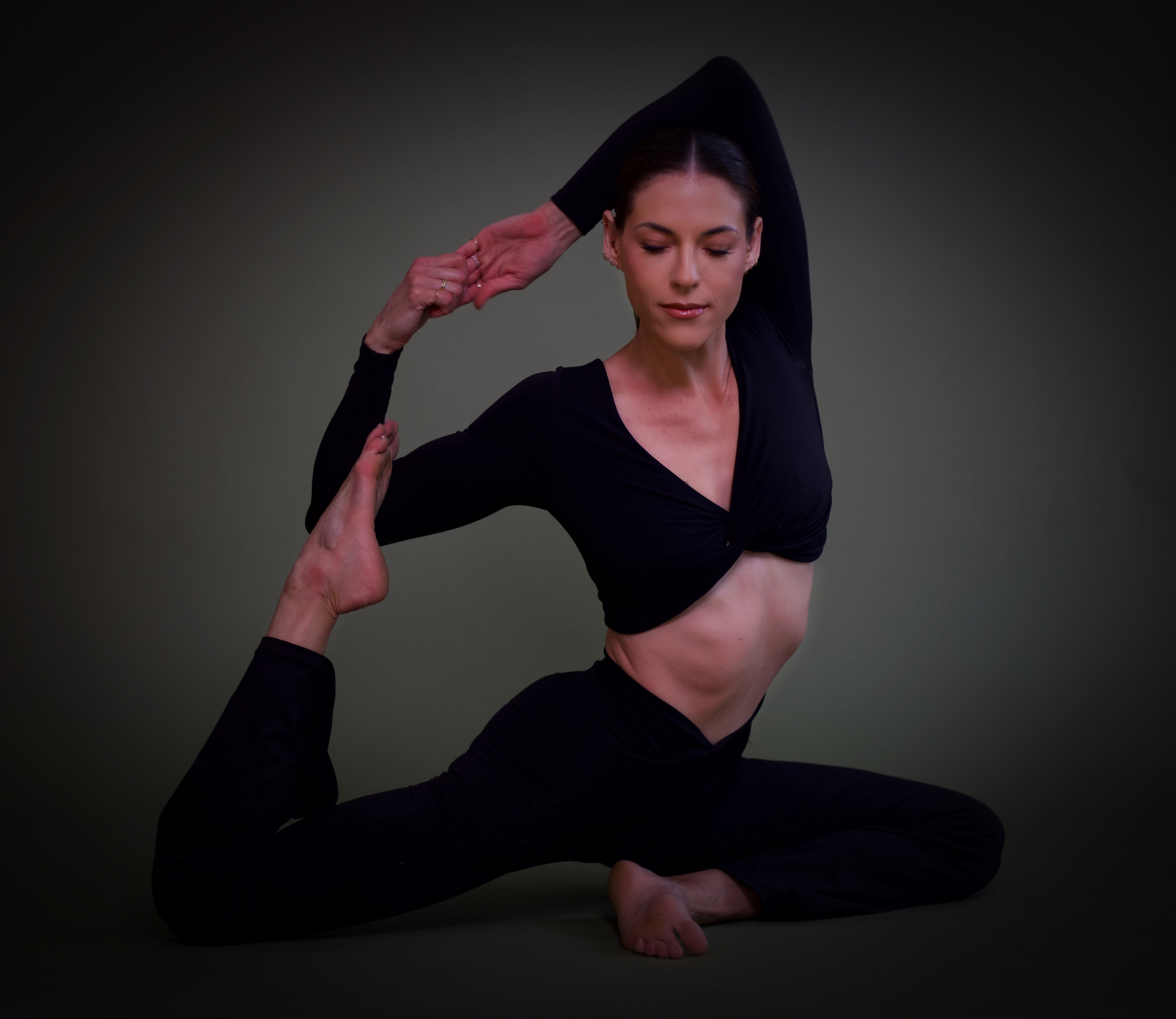
Rocket Yoga Defined
"It gets you there faster"The rebel child of Ashtanga. Rocket Yoga takes the traditional sequences, breaks the rules, reorders poses, and makes "advanced" arm balances and inversions accessible through creative modification—because why wait years to fly?
What Is Rocket Yoga?
Rocket Yoga is a modified Ashtanga Yoga system that breaks from the strict traditional rules to make the practice more accessible, creative, and fun. While Ashtanga requires mastering each pose before moving to the next, Rocket says: try them all, modify freely, and see what happens.
The name comes from founder Larry Schultz's observation that the practice "gets you there faster"—referring not just to physical advancement, but to the joy and liberation found when rigid rules give way to playful exploration.
Rocket maintains the Ashtanga foundation—the vinyasas, the breath, the bandhas—but rearranges sequences, adds pose variations, and encourages modifications that make arm balances and inversions available to practitioners at any level.
Larry Schultz (1950-2011)
A student of K. Pattabhi Jois in Mysore, Larry Schultz became the "unofficial yoga teacher" for the Grateful Dead in the 1980s, traveling with the band and teaching yoga to roadies, musicians, and fans. His irreverent approach and motto—"It's okay not to believe everything your guru says"—shaped Rocket's rebellious spirit. He founded It's Yoga in San Francisco and trained teachers until his death in 2011.
The Three Rocket Sequences
Rocket is traditionally taught as three distinct sequences, each based on (and riffing on) Ashtanga's Primary and Intermediate Series:
Rocket I
Takes the Primary Series structure but adds arm balances, standing split variations, and inversions throughout. The sequence feels more complete in its upper body work.
Rocket II
Draws from Second Series with its backbends and leg-behind-head poses, but breaks up the intensity with more accessible modifications and creative transitions.
Rocket III
Combines elements of both Rocket I and II into a comprehensive practice. Often considered the "full" Rocket experience—demanding but deeply satisfying.
How Rocket Differs from Ashtanga
🔓 Ashtanga (Traditional)
- Fixed sequence, no variations
- Must "master" each pose before progressing
- Teacher gives individual poses as ready
- Years of practice before arm balances
- Minimal modifications encouraged
🚀 Rocket
- Reordered and modified sequences
- Try all poses, modify as needed
- Full sequence available to everyone
- Arm balances and inversions from day one
- Modifications actively encouraged
Signature Rocket Elements
Arm Balances
Crow, side crow, flying pigeon—early and often
Inversions
Handstand, forearm stand integrated throughout
Creative Transitions
Unexpected flows between poses
Props Welcome
Blocks, straps, walls—use them freely
Music Often Included
Unlike silent Ashtanga rooms
Playful Atmosphere
Laughter and falling encouraged
What to Expect in Class
A typical Rocket class runs 75-90 minutes and follows a predictable structure with room for variation:
- Opening: Sun Salutations A and B (often modified or extended)
- Standing sequence: Similar to Ashtanga but with added arm balance options
- Seated sequence: Where much of the "Rocket-ification" happens—poses reordered, inversions inserted
- Backbending: Bridge, wheel, or more advanced variations depending on the sequence
- Finishing: Shoulder stand, headstand variations, closing sequence
- Savasana: Final rest
The class will be physically demanding. Expect to sweat, possibly shake, and definitely be challenged. But unlike traditional Ashtanga, you won't feel stuck—modifications are always available, and the teacher will offer options for every level.
Who Should Try Rocket
Frustrated Ashtangis
If you love the Ashtanga structure but feel stuck at a particular pose or series, Rocket offers a way forward without abandoning the tradition entirely.
Vinyasa Practitioners Ready for More
If you love flow but want more structure and deeper challenge, Rocket provides a defined system with room for expression.
Arm Balance Enthusiasts
If you want to play with arm balances and inversions in a supportive environment, Rocket integrates them throughout rather than saving them for "someday."
Those Who Learn by Doing
If you prefer to try things and modify rather than wait until you're "ready," Rocket's philosophy matches your learning style.
Who Might Find It Challenging
- Complete beginners: The pace is fast and assumes familiarity with basic yoga. Start with Hatha or beginner Vinyasa first.
- Those with injuries: While modifications exist, the practice is demanding. Communicate with teachers and consider gentler styles during recovery.
- Those seeking stillness: If you want a meditative, slow practice, Rocket isn't it. Try Yin or Restorative instead.
Rocket and the Ashtanga Community
Rocket's relationship with traditional Ashtanga is... complicated. Some Ashtanga teachers embrace Rocket as a valid adaptation; others view it as a watered-down version that bypasses important preparation. Larry Schultz trained with Pattabhi Jois and deeply respected the tradition—but also questioned the rigidity that kept students stuck for years.
The reality is that Rocket has introduced thousands of practitioners to the Ashtanga system who might never have found it otherwise. Many Rocket teachers also teach traditional Ashtanga, seeing the two as complementary rather than competing. The foundation is the same; the delivery is different.
Ready to Launch?
Find studios offering Rocket Yoga classes in your area.