Somatic
Somatic refers to body-based awareness and practices that use physical sensation as the primary pathway for learning, healing, and transformation—treating the body not as something to be controlled, but as a source of wisdom to be listened to.
What Does "Somatic" Mean?
Somatic comes from the Greek word soma, meaning "body." In wellness contexts, it refers to practices that work through the body rather than just on the body—approaches that treat physical sensation as meaningful information, not just noise to push through.
This represents a shift in perspective. Conventional fitness treats the body as a machine to be optimized. Somatic approaches treat the body as a living teacher, holding wisdom that the thinking mind alone can't access. Tension patterns, breathing habits, movement tendencies—these all carry information about your history, emotions, and current state.
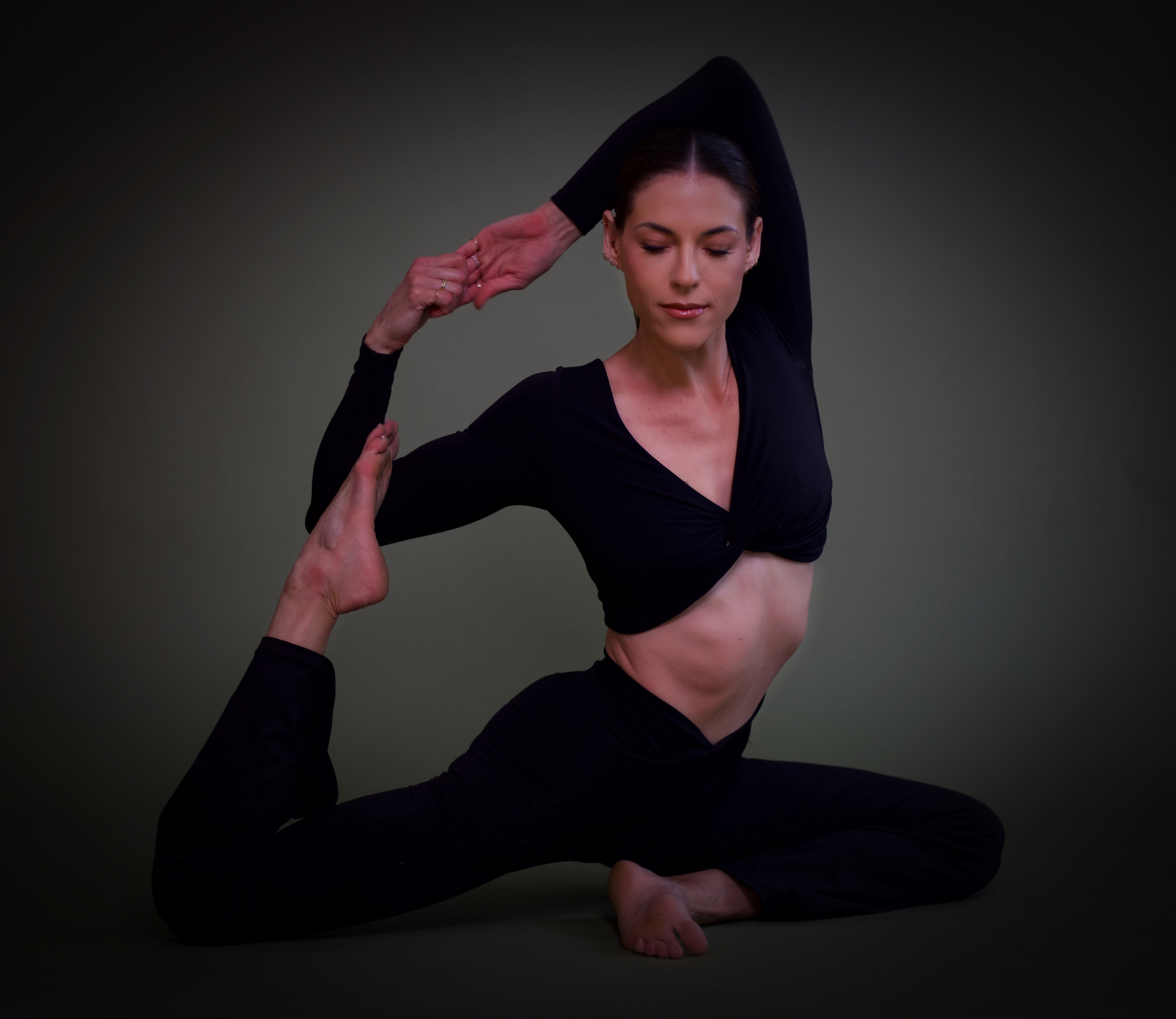
In yoga, somatic practices emphasize internal experience over external appearance. Rather than striving to make a pose look a certain way, you explore how it feels—what sensations arise, what subtle movements release tension, where you're holding effort unnecessarily. The mirror disappears; attention turns inward.
Key Concepts in Somatic Practice
The ability to sense internal body states: heartbeat, breath, muscle tension, gut sensations, temperature. This differs from proprioception (knowing where your body is in space) and is considered a core skill in somatic work. Research links strong interoception to emotional regulation, self-awareness, and overall wellbeing.
Being present in your body rather than treating it as something you carry around. Many people live "from the neck up," disconnected from physical sensation. Embodiment practices restore this connection—feeling the body as self, not as object.
Popularized by Dr. Bessel van der Kolk's work, this phrase captures the somatic understanding that experiences—especially traumatic ones—are stored in the body, not just the mind. Tension patterns, chronic pain, and stress responses can reflect unprocessed experiences. Healing these patterns often requires body-based approaches, not just talk.
Benefits of Somatic Practice
Somatic Approaches in Yoga
Emphasizes slow, exploratory movement guided by internal sensation. Less about achieving poses, more about feeling your way through movement. Often includes pandiculation (gentle contracting and releasing of muscles) inspired by Thomas Hanna's work.
Uses somatic principles to create safe practice for people with trauma histories. Emphasizes choice, consent, and interoceptive awareness. Avoids adjustments without explicit permission and offers multiple options rather than "correct" alignment.
Guided awareness through body regions builds interoceptive capacity while inducing deep relaxation. The systematic body scan is fundamentally a somatic practice.
Long holds with emphasis on sensation rather than stretching intensity. The sustained attention to physical experience cultivates somatic awareness.
Developing Somatic Awareness
- Pause and scan. — Several times daily, stop and notice: What sensations are present? Where is tension? How is your breath?
- Close your eyes in practice. — Remove visual distraction and turn attention inward.
- Slow down. — Speed bypasses sensation. Move slowly enough to feel.
- Name sensations. — Pressure, warmth, tingling, tightness, ease—develop a vocabulary for body experience.
- Follow impulses. — When your body wants to move, stretch, or adjust, let it. Trust its intelligence.
- Practice body scans. — Systematic attention through body regions builds interoceptive capacity.
Somatic Practices Beyond Yoga
- Somatic Experiencing (SE) — Peter Levine's approach to trauma resolution through body sensation
- Feldenkrais Method — Movement education using awareness to improve function
- Alexander Technique — Retraining habitual movement patterns
- Hakomi — Somatic psychotherapy integrating mindfulness and body awareness
- Dance/Movement Therapy — Expressive movement for psychological healing
Explore Somatic Yoga
Find classes that emphasize body awareness and internal experience.
Keep Exploring
Explore more terms, styles, and find studios near you.
Find Studios Near You